How to Troubleshoot and Repair an RV Refrigerator
Table of Contents
Why Your RV Refrigerator Stops Cooling and What to Check First
Safety Basics Before You Touch Any RV Refrigerator Component
Troubleshooting an RV Refrigerator on 12-Volt DC and 120-Volt AC Power
Diagnosing RV Refrigerator Propane Problems in Absorption Mode
How Much RV Refrigerator Repair Costs and When to Replace Instead
Preventive RV Refrigerator Maintenance That Avoids Most Breakdowns
Booking Professional RV Refrigerator Repair With Sharp RV Services
Why Your RV Refrigerator Stops Cooling and What to Check First
Last Updated: October 28, 2026
Your RV refrigerator is one of the most important appliances on board, and when it stops cooling, food can spoil fast. Most RV refrigerators are absorption units that run on propane, electricity, or both, unlike a home kitchen fridge. That difference is why a quick check of the basics often solves the problem.
Many cooling problems come from the power source, the level of the unit, or the vents.
Start with the power source. Check which mode the refrigerator is set to. Propane needs gas flowing to the burner; electric needs power from the shore cord, generator, or house batteries. Make sure the switch matches the power you have.
Confirm the propane tank valve is open
Check that the shore power or generator is running
Look at the 12-volt DC fuse and the 120-volt AC circuit breaker
Make sure the refrigerator is switched on at the control panel
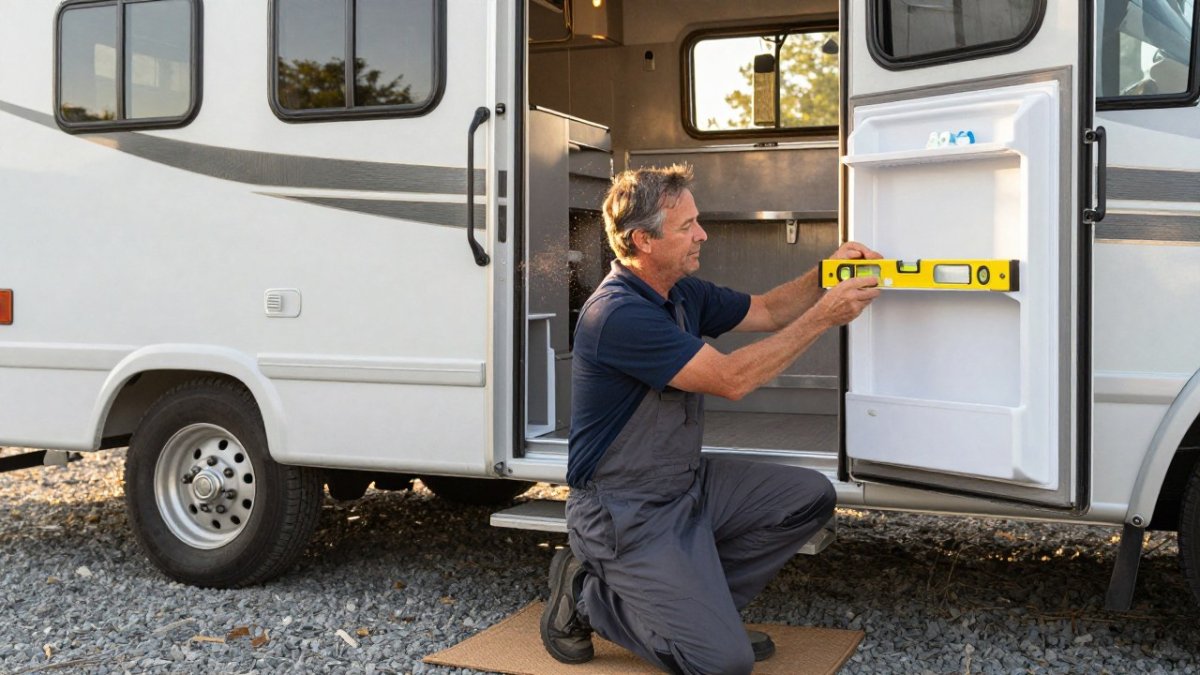
Check the level. Absorption refrigerators need to sit level. A tilted RV can stop the cooling fluid from flowing, causing warm spots. Use a bubble level on the shelf or refrigerator floor.
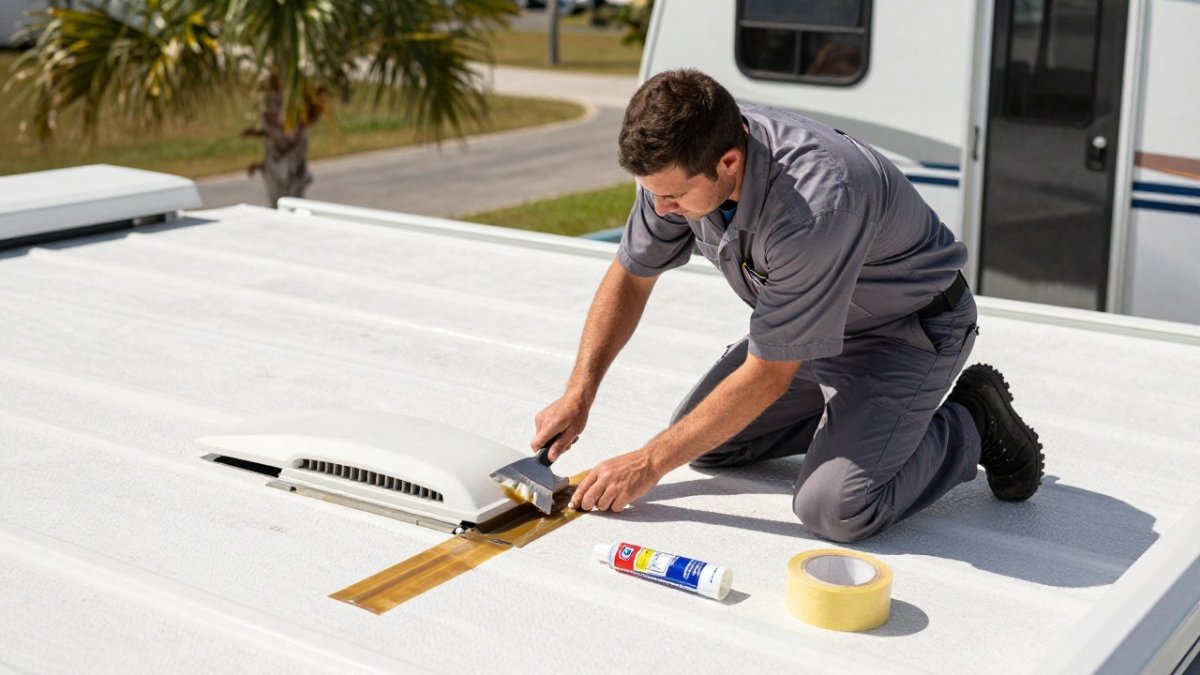
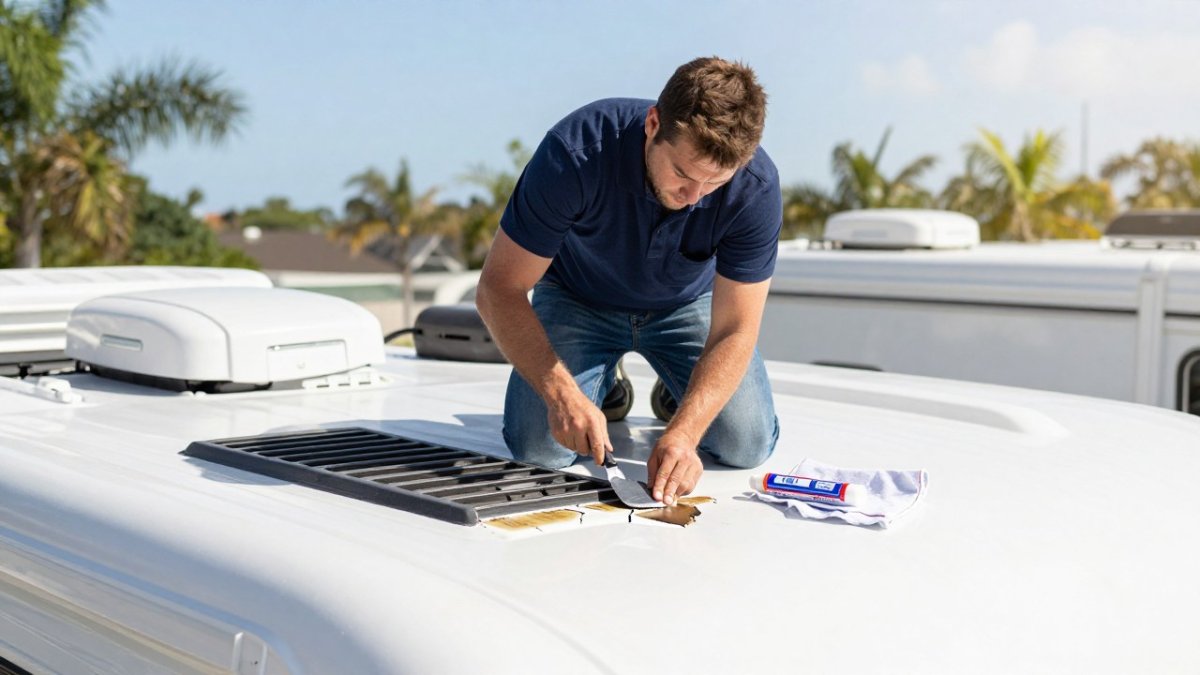
Look at the vents. Air needs to move freely over the cooling unit. Check the exterior vent on the back or roof for bird nests, dirt, or debris. Blocked vents make the unit run hot and cool poorly.
Watch out: Do not block the vents with covers or storage bags while the unit is running. This is a common cause of overheating and poor cooling.
If these checks look fine and the refrigerator still runs warm, the problem is likely inside the unit. The next sections explain how to safely test each power mode and when to call a technician.
Safety Basics Before You Touch Any RV Refrigerator Component
Safety comes first when you work on an RV refrigerator. The unit uses propane gas, high-voltage AC power, and low-voltage DC power. Each one can cause harm if handled the wrong way.
Turn off every power source before opening any panel: shut the propane tank valve, unplug the shore cord, turn off the generator, and switch off the 12-volt supply. Wait a few minutes before starting.
Never test a gas connection with a flame. Use soapy water to check for leaks.
Keep fire extinguishers within reach when working near propane.
Work in a ventilated area with the RV doors open.
Use insulated tools and keep one hand clear of live wires.
Propane leaks are dangerous. If you smell gas, leave the RV right away, do not switch lights or appliances on or off, and call your gas supplier or the fire department from a safe distance. Carbon monoxide is another risk. Make sure your RV has working detectors.
Do not open the sealed cooling unit. The cooling fluid inside is under pressure and handled only by trained technicians, so leave any work on the cooling core or internal lines to a professional.
Watch out: Never disconnect the propane line or the cooling unit while the gas supply is still on. A small leak can become a serious fire risk quickly.
When you are unsure about any step, stop and call a technician.
Troubleshooting an RV Refrigerator on 12-Volt DC and 120-Volt AC Power
Many RV refrigerators run on electricity when propane is unavailable or not preferred. Test each power mode separately to isolate the problem.
Test 12-volt DC power:
Turn the refrigerator to the 12-volt DC setting.
Check the 12-volt fuse in the fuse panel. Replace it only with a fuse of the same rating.
Use a multimeter to read the voltage at the refrigerator's DC input. You should see about 12 volts.
Check the control board for a steady light or error code. Look up the code in the owner's manual.
Test 120-volt AC power:
Turn the refrigerator to the AC setting and plug in the shore cord or start the generator.
Check the circuit breaker that feeds the refrigerator.
Use a voltage tester at the outlet to confirm power is reaching the unit.
Listen for the cooling element or fan. No sound at all often points to a power or control problem.
A loose wire or bad connection causes many electrical failures. Look for melted plugs, burned spots, or green corrosion on the terminals, then clean and tighten connections and replace damaged wire.
Some RV refrigerators switch power modes on their own. If the unit jumps between DC and AC, check the power selector switch and control board. A failing thermistor or heating element can also send wrong readings to the board.
Watch out: Never run a 120-volt circuit without confirming the breaker is off before you touch the wiring. Shock from household voltage can be fatal.
Diagnosing RV Refrigerator Propane Problems in Absorption Mode
Absorption refrigerators cool with heat from a propane burner. Heat drives a cooling fluid through a sealed loop that absorbs heat from inside the box. When the burner, flame, or airflow fails, cooling stops.

Start with the basics: confirm the propane tank has fuel, the regulator works, and the valve to the refrigerator is open. A closed valve is one of the most common causes of no cooling on propane.
Check the burner flame. It should be steady and blue, with a small yellow tip.
A weak or yellow flame often means a dirty burner or poor airflow.
A flame that will not light may point to a bad igniter or a clogged orifice.
Look at the flue and the vent above the burner for soot or blockages.
The igniter sparks when you press the ignition button. If you hear clicking but see no flame, the igniter or gas supply needs a closer look. Do not force the burner or change the gas jets yourself; these parts are set to exact specifications.
Poor leveling is another cause in absorption mode. Even a slight tilt can stop the fluid from flowing correctly, so check the level again after you adjust the RV.
Many people believe a noisy refrigerator is always broken. Some clicking during ignition is normal, but steady hissing, popping, or a strong gas smell is not and calls for an immediate stop.
Watch out: If the flame goes out and gas keeps flowing, shut the propane valve at once. This is a gas leak risk.
Propane troubleshooting can be tricky, so call a technician if the flame looks wrong or the burner needs cleaning.
How Much RV Refrigerator Repair Costs and When to Replace Instead
Repair | Typical Parts Cost | Typical Labor | Total Range |
Fuse or circuit breaker replacement | $5-$20 | 0.5 hr | $75-$150 |
Burner cleaning or orifice replacement | $15-$60 | 1 hr | $100-$250 |
Igniter or spark electrode | $30-$80 | 1 hr | $120-$280 |
Thermistor replacement | $20-$50 | 0.5-1 hr | $80-$200 |
Control board replacement | $150-$400 | 1-2 hr | $300-$700 |
Heating element (AC) | $60-$150 | 1-2 hr | $200-$450 |
Cooling unit replacement | $700-$1,500 | 3-5 hr | $1,200-$2,500 |
Full refrigerator replacement (absorption) | $1,200-$3,000 | 2-4 hr | $1,500-$3,800 |
Repair-versus-replace decision factors:
Age: Most absorption refrigerators have a service life of about 10-15 years. A unit past 12 years with a failed cooling unit is usually a replacement candidate.
Repair cost as a share of replacement: A common rule of thumb among RV technicians is that if a single repair exceeds about 50% of the cost of a new unit, replacement deserves serious consideration.
Cooling-unit failure: A failed cooling unit is the most expensive common repair. On an older refrigerator, the cooling-unit replacement cost often approaches the price of a new unit, which tips the decision toward replacement.
Repeat failures: Two or more significant repairs within a 12-month period suggest the unit is near the end of its life.
Parts availability: If the needed part is discontinued or on backorder for weeks, replacement may be the faster path.
Fit and space: RV refrigerator openings are sized to standard dimensions. Measure the cutout height, width, and depth before buying a replacement, and confirm the new unit's amperage and venting requirements match your RV.
Pro Tip Ask for a written estimate that separates parts, labor, and any mobile trip charge. A clear estimate lets you compare the repair cost directly against a replacement quote.
Watch out:
Preventive RV Refrigerator Maintenance That Avoids Most Breakdowns
Leveling. Absorption refrigerators rely on gravity to circulate the cooling fluid. Level the RV before running the refrigerator on propane or AC, using a bubble level on the refrigerator floor or a shelf.
Ventilation. The exterior vent behind or above the refrigerator must allow air to flow freely across the cooling coil.
Burner and flue.
Door seal.
Electrical connections.
Interior organization and temperature.
Seasonal checklist:
Level the RV before each use.
Clean exterior vents before each trip.
Inspect burner and flue once a season.
Test the door seal monthly.
Check fuses and breakers before each trip.
Test each power mode (propane, AC, DC) before a long trip.
Schedule an annual technician inspection to catch loose wires, weak flames, and clogged vents.
Watch out: Do not run the refrigerator on propane while parked at a fuel island or in an enclosed space. Propane exhaust contains carbon monoxide, and running the burner in an unventilated area is a safety hazard.
Booking Professional RV Refrigerator Repair With Sharp RV Services
Some RV refrigerator problems are simple to fix at home. Others, such as burner faults, control board failures, or cooling unit damage, need a trained technician with the right tools. If you are unsure what is wrong or the fixes above do not solve it, it is time to get help. Visit our repair services to see what we offer and how to get started.
Sharp RV Services offers mobile repair and maintenance for all types of recreational vehicles across Pinellas County. To request a repair appointment, contact us directly. Our team comes to your RV, so you do not have to tow it to a shop.
Frequently Asked Questions
Why is my RV refrigerator not cooling?
The most common causes are a power source that is not supplying enough voltage, a dirty or blocked cooling unit, poor ventilation behind or above the fridge, or an absorption unit that is not level. Start by confirming which power mode the fridge is running on, then check that the vent openings are clear and the unit sits level. If the fridge still does not reach a safe temperature after those checks, the cooling unit, control board or heating element may need professional service.
How much does RV refrigerator repair cost?
Repair costs depend on the failed part, the fridge model, and the labor required, so pricing varies widely. Simple fixes such as cleaning vents or replacing a fuse are usually inexpensive, while cooling unit or control board work costs considerably more. For current pricing and a quote for your specific refrigerator, contact Sharp RV Services directly through the website, where you can request an estimate before any work begins.
Can you repair an RV refrigerator yourself?
Some tasks are reasonable for an owner, such as cleaning exterior vents, checking the 12-volt DC fuse, confirming the 120-volt AC breaker, and leveling the unit. Work involving propane lines, the burner assembly, igniter or sealed cooling components carries real fire, gas and electrical risk and should be left to a qualified RV repair technician. Always disconnect power and shut off the propane supply before inspecting internal parts.
When should I call a technician for RV refrigerator problems?
Call a technician if the fridge does not light on propane, if you smell gas, if the flame looks yellow or irregular, if the error code persists after basic checks, or if you see signs of a leaking cooling unit. Service is also worth scheduling when food spoils despite correct power and ventilation. A technician can test the thermistor, heating element and control board with proper equipment, which owners rarely have at hand.
Comments