RV Repair Pricing in Pinellas County: What to Expect
Table of Contents
Last Updated: October 21, 2026
Understanding RV Repair Pricing in Your Area
RV repair pricing in Pinellas County varies based on what needs fixing and who you call. Sharp RV Services understands that RV owners need transparent, straightforward pricing before work begins, not surprise invoices after the technician leaves.
The real challenge with RV repair pricing isn't what things cost, it's what drives those costs. Service call fees, labor rates, parts markups, and diagnostic charges vary by provider and repair type. Mobile services like Sharp RV Services use different pricing models than brick-and-mortar shops, and knowing the difference helps you decide smarter.
Pro Tip Before calling any RV repair service, have a clear description of what's wrong. "The AC isn't working" is vague. "The AC runs for 15 minutes then shuts off" gives the technician real information and leads to better pricing estimates.
What Factors Drive RV Repair Costs
Several factors determine what you'll pay for RV repair. Understanding these helps you anticipate costs and recognize fair pricing.
Labor rates are the biggest variable. Mobile technicians charge hourly rates reflecting expertise, travel time, and overhead. A simple repair might take 45 minutes; a complex diagnostic three hours. RV-certified technicians command higher rates than general handymen.
Parts costs depend on what breaks. OEM parts cost more than aftermarket alternatives but often carry better warranties, and specialty parts not stocked locally add shipping time and cost.
Diagnostic fees separate good shops from problematic ones. A proper inspection takes time, and technicians who charge for diagnostics aren't guessing.
Service area coverage affects pricing too. A technician dispatched 30 minutes away charges differently than one 5 minutes away, and peak winter snowbird season in Pinellas County can push rates higher.
Key Takeaway The cheapest quote isn't always the best deal. A shop that quotes low but adds surprise charges later costs more in stress and money than transparent pricing upfront.
Common RV Repair Costs You Should Know About
Certain repairs come up repeatedly for RV owners, and knowing typical cost ranges helps you spot overpricing. These ranges reflect common mobile and shop quotes for Class A, Class B, Class C, and travel trailer work; your bill depends on RV size, system complexity, parts availability, and urgency.
AC and cooling system repairs are among the most common. Regular maintenance prevents these failures.
Water system repairs include leaks, pump failures, and tank issues.
Appliance repairs depend on the appliance. Past service life, replacement often beats repair.
Electrical and plumbing issues range from simple fixes to complex diagnostics.
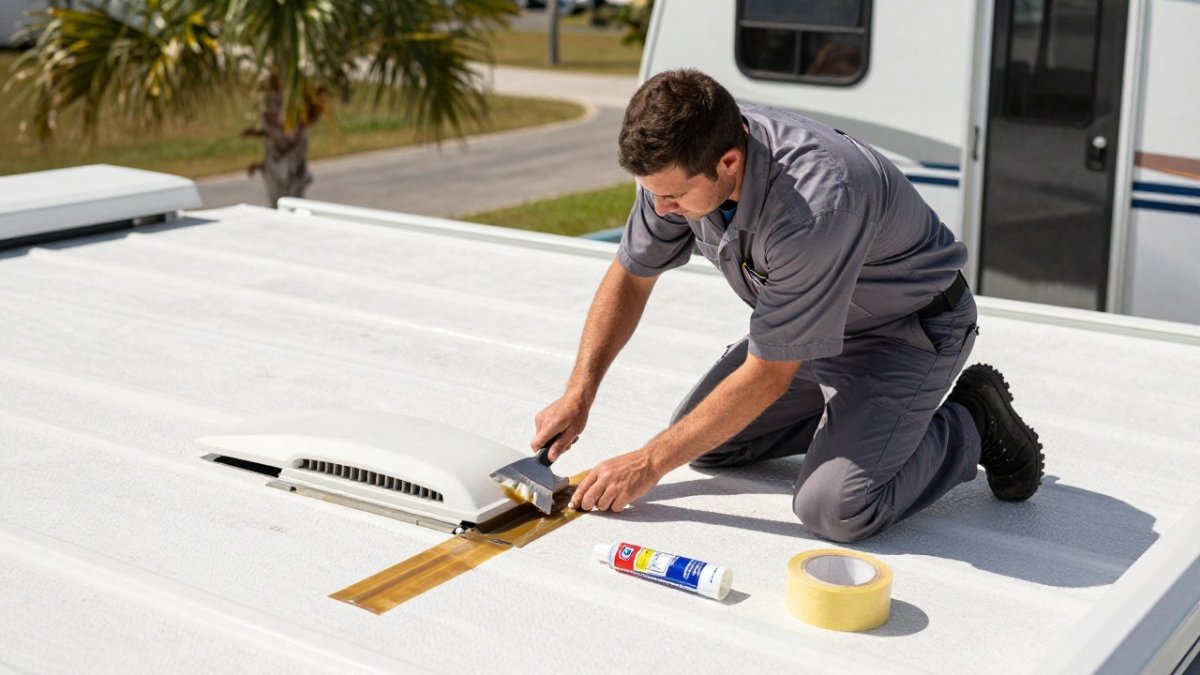
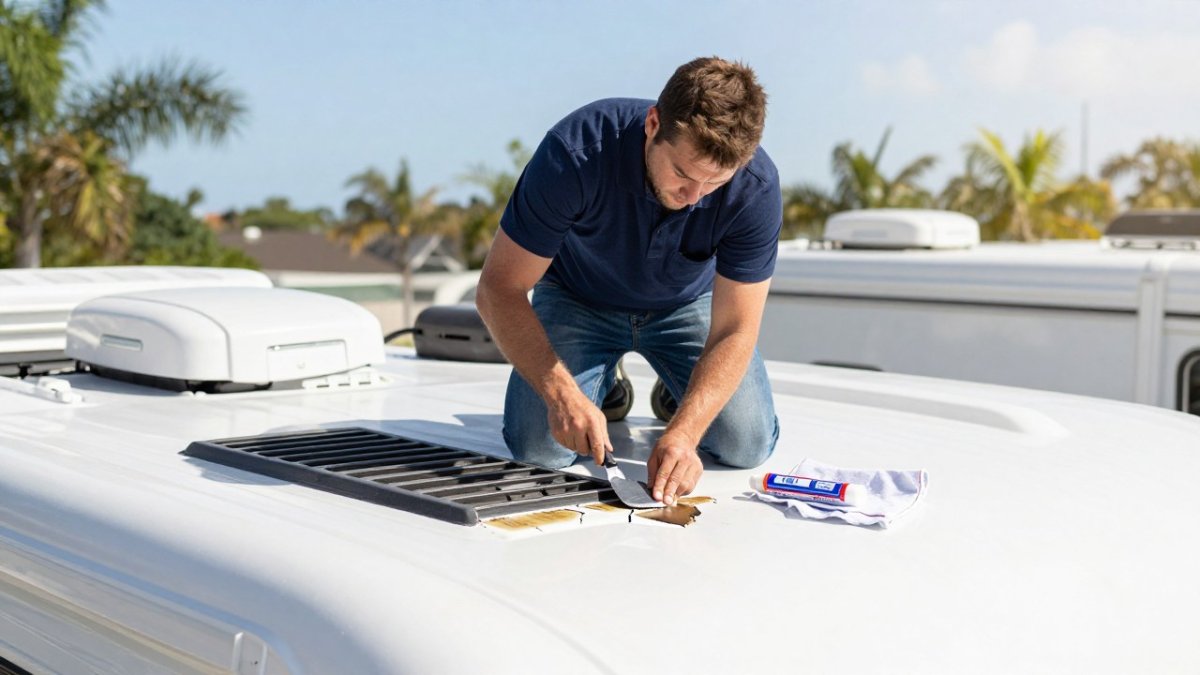
Exterior repairs like roof leaks, sealant replacement, and damage repair depend on the extent of work. Water damage caught late can balloon costs, delamination or soft-floor repair can push a job into the thousands.
Slide-out and leveling system repairs are another frequent category.
How local conditions move these numbers: In Pinellas County, winter snowbird demand pushes labor rates and wait times higher, while summer storm season spikes roof-leak and water-intrusion calls. Common OEM parts may be stocked locally, but specialty components add shipping time and cost.
The key insight: preventive maintenance costs far less than emergency repairs. Regular inspections catch small problems before they get expensive, and a written estimate built on these criteria lets you compare providers on equal footing rather than headline price.
RV Repair Service Call Fees Explained
A service call fee is what the technician charges just to show up and assess your RV, separate from the actual repair work.
Many mobile RV repair providers charge a service call fee, depending on distance and complexity. Some waive it if you proceed with repairs; others keep it regardless. The fee covers the technician's time to diagnose the problem, create an estimate, and travel to your location.
Service call fees aren't arbitrary. They compensate the technician for fuel, vehicle wear, insurance, and assessment time. A technician who shows up, spends 30 minutes diagnosing your issue, and explains what needs fixing has earned that fee even if you don't proceed.
Sharp RV Services believes in transparent communication about fees upfront. You should know exactly what you'll pay for the service call before the technician arrives. No surprises, no hidden charges after the fact.
Watch Out Avoid shops that quote repair work over the phone without seeing the RV. They're either guessing (which leads to inaccurate estimates) or planning to charge you more once they arrive. Either way, you lose.
Mobile RV Repair vs. RV Repair Shop: Cost and Convenience
The choice between mobile RV repair and traditional shops affects both cost and convenience.
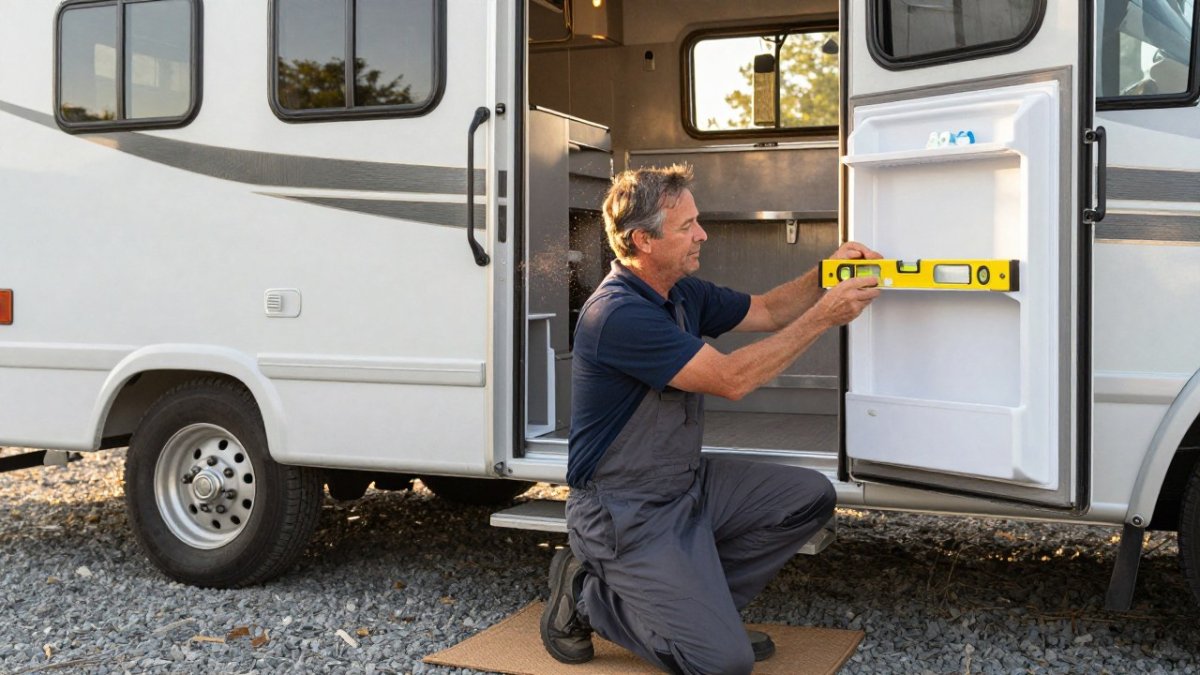
Mobile RV repair comes to you. The technician brings tools and diagnostic equipment to your home, storage lot, or campground, eliminating towing costs. Mobile services charge higher hourly rates to account for travel time, but you save on towing and lose no time without your vehicle.
RV repair shops require you to bring your RV in. They have dedicated bays, lifts, and specialized equipment, and for major work like collision repair or transmission overhaul, a shop is often necessary. But you pay for towing, lose use of your RV, and spend time on drop-off and pickup. Lower hourly rates are often offset by towing and downtime.
For routine maintenance, AC service, water system repairs, and appliance work, mobile RV repair makes financial sense. For major structural damage or complex transmission work, a shop is often better. Many RV owners use both: mobile technicians for quick fixes, shops for major repairs.
The real advantage of mobile RV repair? Transparency. When the technician works with you present, you see the work happening and are less likely to pay for unnecessary repairs because you're watching and asking questions.
Creating an RV Repair Estimate Checklist
Before you commit to any RV repair, get a written estimate. It protects you and clarifies costs, but only if you understand how the numbers are calculated. Here's what goes into an RV repair estimate and how to read it line by line.
How the estimate is built:
Diagnostic fee. A proper inspection takes time. Many mobile providers charge for a diagnostic or multi-point inspection. Ask whether that fee is credited toward the repair if you approve the work, some providers apply it, others do not.
Minimum labor charge. Many providers bill a minimum of one hour of labor even for a 20-minute fix, because the technician's time, travel, and setup are already committed. Ask what the minimum is before you approve a small job.
Labor rate and hours. Confirm the hourly rate and whether hours are estimated from a flat-rate book, actual time, or a diagnostic-driven guess. Flat-rate pricing is more predictable; time-and-materials can drift on complex jobs.
Travel or service call fee. This covers fuel, vehicle wear, insurance, and drive time. It is separate from labor and is sometimes waived if you proceed with the repair. Confirm the amount and whether it changes with distance.
Parts markup. Parts are often billed above the provider's cost. Ask whether the quote shows the part price and whether OEM, aftermarket, or refurbished parts are being used, each carries a different price and warranty.
After-hours and emergency rates. Nights, weekends, and holiday calls commonly carry a premium. If your repair can wait until a standard business window, you may avoid a surcharge.
Estimate credit and change-order policy. Ask whether the estimate is credited toward the final bill and what happens if the technician finds additional problems. A transparent provider stops work and calls you for written approval before exceeding the estimate, often by a stated percentage such as 10 to 15 percent.
What to ask for in an estimate:
Specific description of the problem and proposed fix
Parts needed and their costs (OEM vs. aftermarket)
Labor hours and hourly rate, plus any minimum labor charge
Diagnostic fee and whether it is credited toward the repair
Service call or travel fee, and any after-hours surcharge
Warranty on parts and labor
Timeline for completion
Total estimated cost and the change-order policy
A good estimate should be detailed enough that you understand exactly what you're paying for. Vague estimates like "AC repair: $500" don't tell you whether that includes parts, labor, the diagnostic fee, or all three.
Red flags in estimates:
Extremely low quotes compared to others (usually means incomplete work, a missing fee, or hidden charges later)
Vague descriptions ("miscellaneous repairs," "labor as needed")
No breakdown of parts vs. labor vs. fees
No stated policy for additional work discovered mid-repair
Pressure to authorize work immediately
Unwillingness to put the estimate in writing
Apples-to-apples comparison: Compare at least two estimates on the same criteria: same parts (OEM vs. aftermarket), same labor hours, same warranty terms, same diagnostic and travel fees, and the same change-order policy. If one is half the price of another, ask why, the answer reveals whether you're getting a bargain or a shortcut.
Pro Tip Request itemized estimates from multiple providers. Write down what each includes, then compare apples to apples: same parts, same labor hours, same warranty terms, same fee structure. This is how you spot fair pricing.
Getting Transparent Quotes and Avoiding Surprises
The biggest complaint RV owners make about repair shops is surprise charges. You authorized $400 of work and received a $650 bill because "additional issues came up."

Transparent shops handle this differently. Sharp RV Services stops work if new issues emerge and calls you before proceeding, and you approve additional work in writing before the technician continues.
How to protect yourself:
Get the estimate in writing and sign it. The estimate should state that any additional work requires your approval before the technician starts.
Understand the difference between "estimated" and "guaranteed." Most estimates are approximations, and complex repairs sometimes reveal hidden issues. A good shop commits to calling you before exceeding the estimate by a certain percentage.
Ask about warranty. Does the shop warranty parts? For how long? Does labor come with a warranty? A shop confident in its work stands behind it. Shops that won't warranty their repairs are telling you something.
Request a detailed invoice after work is complete. It should match the estimate closely. If charges differ significantly, ask for an explanation before paying.
The best protection is choosing a provider committed to honesty. Ask questions, read estimates carefully, and trust your instincts, if something feels off, it probably is.
RV repair pricing in Pinellas County depends on what needs fixing, who does the work, and how transparent they are about costs. When you choose a service provider committed to straightforward pricing and clear explanations, you get back on the road with confidence and without surprise bills. The Better Business Bureau provides guidance on evaluating service providers and protecting yourself as a consumer.
Frequently Asked Questions
Do mobile RV repair technicians charge a service-call fee?
Many mobile RV repair providers charge a service-call fee to dispatch a technician to your location. This fee varies depending on the provider and your distance from their base. Some providers waive the service-call fee if you proceed with repairs, while others apply it as a credit toward labor costs. Always ask about service-call fees upfront when booking an appointment so there are no surprises when the technician arrives.
What should an RV repair estimate include?
A complete RV repair estimate should list the specific problem diagnosed, the parts needed with individual costs, labor hours and hourly rates, any service-call or diagnostic fees, and the total estimated cost before work begins. The estimate should also clarify what warranty or guarantee applies to the repair work. A transparent estimate protects you by ensuring you understand exactly what you're paying for and can compare quotes from different providers fairly.
Is mobile RV repair more expensive than taking an RV to a shop?
Mobile RV repair eliminates your cost and hassle of towing or driving your RV to a fixed location, but the labor rates may differ. Some mobile technicians charge slightly higher hourly rates to cover travel time and fuel, while others price competitively. The real savings with mobile service often come from convenience and reduced downtime, not necessarily lower per-hour costs. Compare total estimates from both mobile and shop-based providers to see which offers better overall value for your specific repair.
What are the most common RV repairs and their typical cost range?
Common RV repairs include air conditioning system repairs, water system fixes, appliance replacements, electrical troubleshooting, and roof or window leaks. Costs vary widely based on the specific problem, your RV model, and parts availability. AC repairs might range from minor fixes to full compressor replacement, while water damage repairs depend on the extent of the damage. Contact a local mobile RV repair provider for a diagnostic inspection and estimate tailored to your specific issues and vehicle.
Comments